

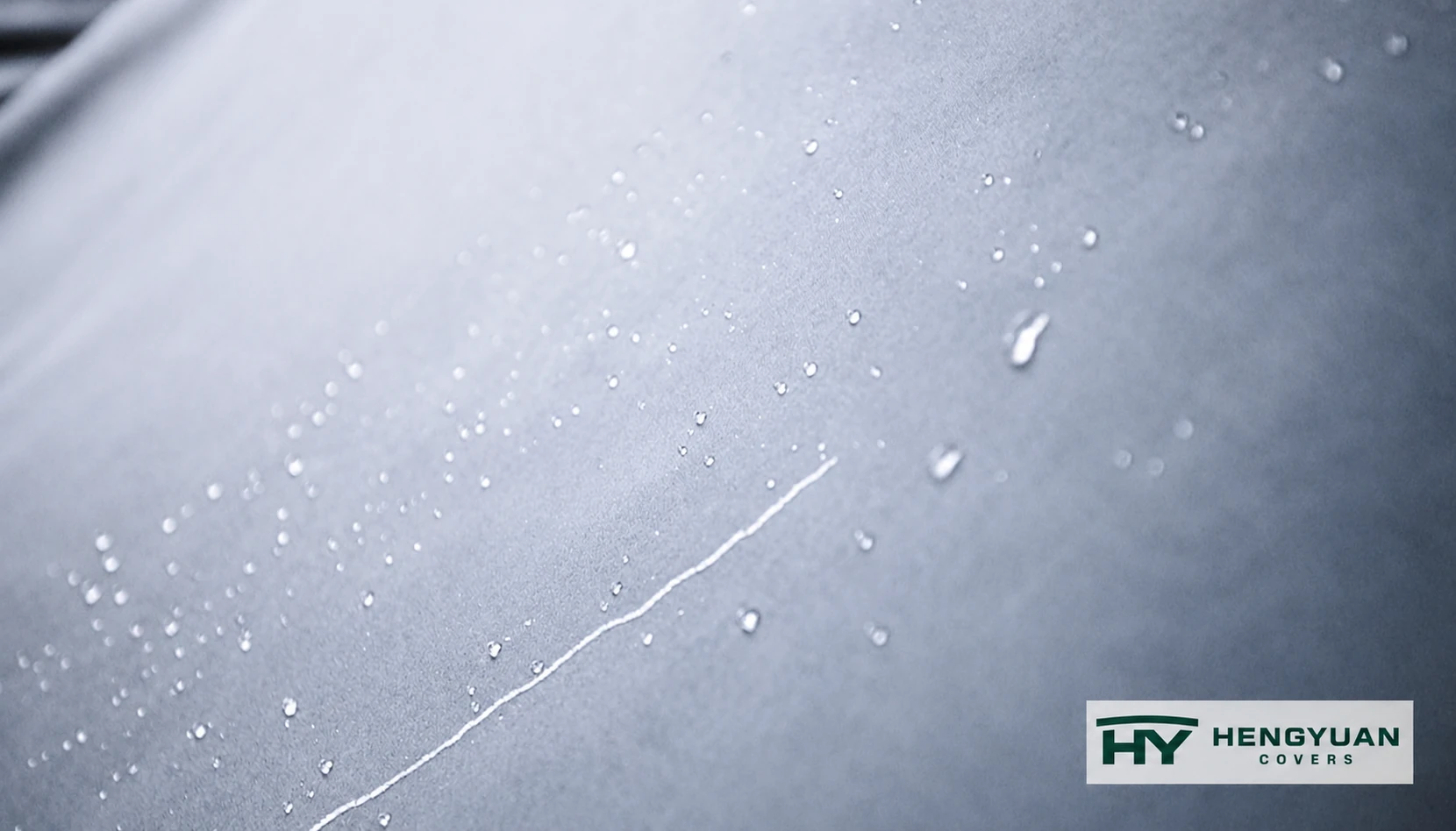
Material close-up for illustration. Surface water beading alone does not establish a finished cover’s waterproof performance.
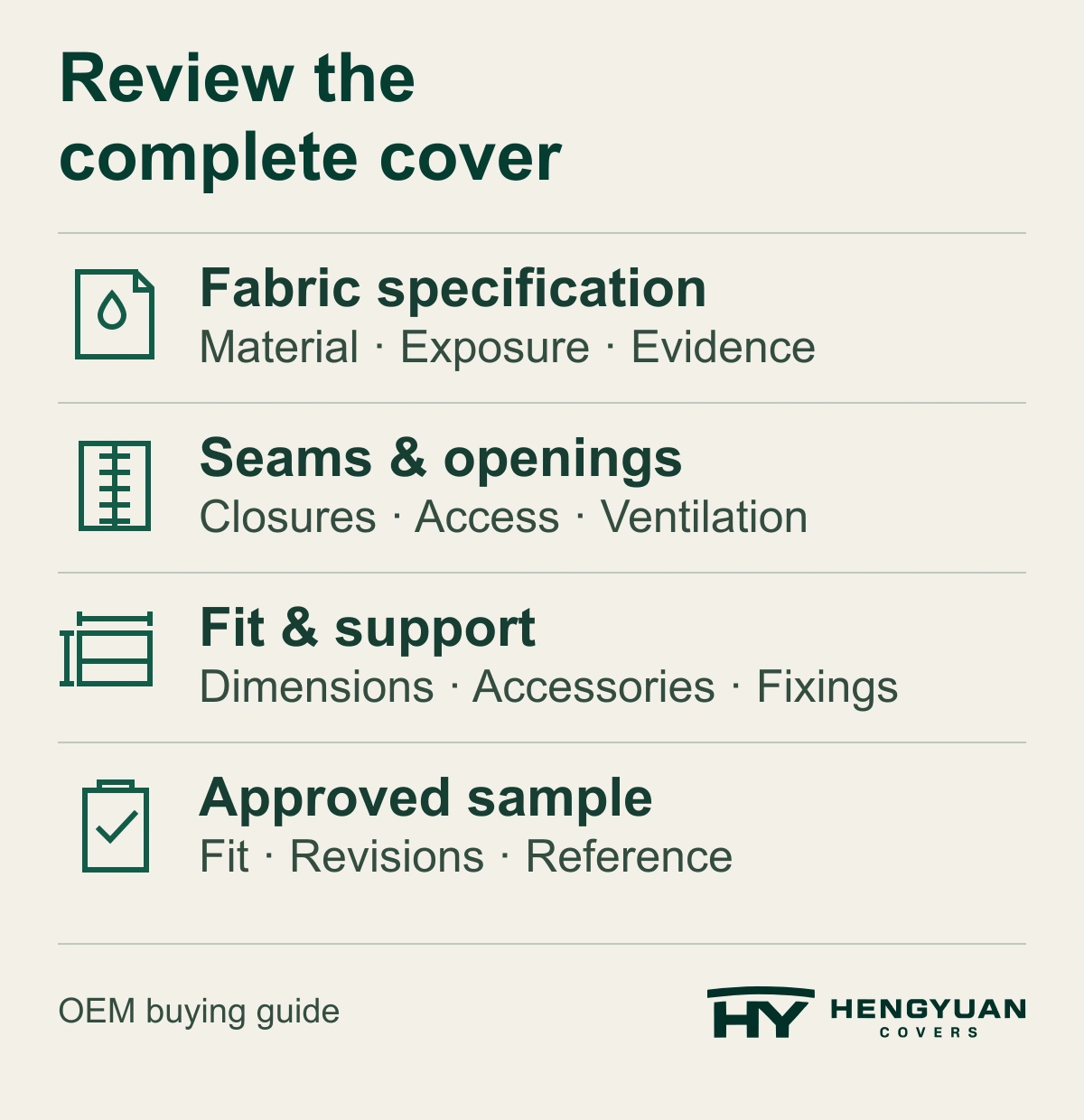
For an outdoor protective cover, “water-resistant” and “waterproof” describe different material requirements. Neither word, used alone, tells a buyer how the complete cover will perform. The useful specification connects the proposed fabric with the cover’s seams, openings, fit, installation and intended exposure. For an OEM or private-label program, agree those details before approving the sample.
This guide is for brands, importers and distributors comparing custom protective cover proposals. It explains what to ask, what to put in a purchase brief and how to turn a broad request for “outdoor protection” into a sample that both parties can review against the same requirements.
Water-resistant vs waterproof covers: start with the actual material
A water-resistant fabric resists water penetration, but its performance depends on the specific material, finish and conditions. A waterproof coating or backing is a different specification; the description still needs to be checked against the proposed construction. The fibre name, colour or thickness by itself is not a complete performance statement. Published fabric guidance confirms that products within a material range can have different water-resistance characteristics.
Ask the supplier to identify the exact proposed material and the evidence available for it. If a quotation uses a performance term, ask what that term means for this project. Record the agreed requirement instead of allowing two different materials to appear equivalent because both quotations use the same general adjective.
Separate fabric information from finished-cover approval
A swatch helps a buyer discuss the proposed material. An assembled sample answers different questions: does the pattern fit the intended product, are the access points in the right places and does the construction match the specification? Keep those two reviews separate in your approval notes.
For example, a buyer may approve a boat console cover fabric before deciding where a fastening should sit on the fitted sample. Those decisions address different parts of the specification and should be recorded separately.
Before sampling, ask which proposed checks apply to the fabric and which apply to the assembled cover. Where a performance claim is intended for packaging or a product listing, agree what evidence is needed to support that particular claim. Do not turn an informal sample observation into an unsupported rating or guarantee.
Review seams, access openings and ventilation together
Photograph the sample from the front, back, sides and any areas that open or fasten. Mark the seams and openings that need discussion, then ask the manufacturer how their construction relates to the intended application. Discuss water resistance, breathability and ventilation as separate requirements for the proposed material and cover design.
In your brief, identify the parts of the covered product that must remain accessible during storage. State whether the cover will normally stay closed or be opened regularly. Ask the manufacturer to review the proposed opening, closure and ventilation details as one design rather than approving each detail in isolation.
Do not assume that a storage cover is suitable for transport or for use while equipment is operating. If either use is required, describe it explicitly and request a separate suitability review. The application and instructions should match the product being developed.
Define fit, support and attachment points before ordering
For boat storage covers, discuss how poles, straps or bows can support the cover and reduce pooling. Before folding or storing a cover, follow the material-specific care instructions and check that the fabric is dry. Treat these as points to confirm for the proposed cover rather than applying one care routine to every material.
Provide dimensions of the actual product in its intended storage configuration. Include the projections, handles, accessories and attachment areas that the pattern must account for. Add photographs showing how the product will stand or be stored. Ask the manufacturer which additional measurements are needed before treating a size description as final.
Where a support or accessory is part of the proposed design, record whether it is included in the supplied package or provided separately. During sample review, check the package contents against that decision. This helps the buyer prepare instructions around the agreed product rather than an assumed installation.
A practical specification checklist for comparing cover quotations
Use the same questions for each proposal. The aim is to make differences visible before comparing totals, not to prescribe one fabric or construction for every application.
- Application and exposure: What is being covered, where will it be stored and what conditions should the manufacturer consider? Separate an indoor dust-cover brief from an outdoor-storage brief.
- Dimensions and configuration: Which drawing, measurement sheet or reference sample defines the shape? Identify accessories that will remain fitted, and clarify which configuration is being quoted.
- Material description: Which fabric and finish are proposed? What information supports the stated performance, and does the sample use the same material as the quotation?
- Construction details: Which seams, closures, straps and ventilation features need approval? Use annotated sample photographs to document changes instead of relying only on a short email description.
- Branding and packaging: Which logo, label, storage bag and packaging requirements belong to the order? Identify the artwork version so the approved sample and repeat order use the same reference.
- Acceptance and instructions: Who reviews the sample, what checks are agreed and how are open questions resolved? Confirm the information needed for installation, care and storage instructions.
Mark each item as confirmed, awaiting information or requiring a sample revision. Keep the agreed checks and supporting documents with the sample approval record, so a purchasing colleague can understand the decisions without reconstructing the discussion.
Use sample approval to create a repeat-order reference
Once a buyer approves a sample, preserve the documents that explain what was approved. Keep the material reference, dimension revision, construction notes, artwork and packaging specification together. A sample photograph is more useful when its associated specification and revision are clear.
If a detail changes after approval, record that change before placing the production order. For a repeat order, ask whether the existing approved specification still applies. Avoid using a general product name as the only reference when the program includes multiple sizes, materials or packaging versions.
Hengyuan’s custom cover development process includes application review, material and pattern development, sample approval and production setup. The agreed material, pattern, labels and packaging provide the working reference for repeat production. Buyers can begin the discussion with dimensions, drawings or a reference sample, together with the application and order requirements.
Common questions from protective cover buyers
Does waterproof fabric make the finished cover waterproof?
A material description does not approve the assembled cover. Review the complete sample against the agreed application, including its construction and openings. Ask what evidence is available before making a finished-product performance claim in a listing, label or sales document.
Is a heavier fabric always the better choice?
Do not approve a proposal on weight alone. Ask the supplier to explain the specification in relation to the intended application and handling requirements. Compare the complete proposal and review the sample before deciding which option fits your product program.
Can the same cover specification be used across different products?
Start with a brief for each application and size configuration. Ask the manufacturer which details can be shared and which need a separate pattern or sample review. Standardising a range should follow those decisions rather than replace them.
What should I send Hengyuan for an OEM or private-label enquiry?
Send the product application, dimensions or drawings, reference photographs, target quantity and market requirements. Include the branding and packaging you want discussed, and list any performance claims that require supporting evidence. Hengyuan can then review the route to sampling and production without treating an unconfirmed requirement as an established capability.
Explore Hengyuan’s boat cover range and RV and trailer covers, or share your custom cover requirements to discuss the material, fit and sample details for your project.
This guide was prepared with AI assistance using the linked technical references and Hengyuan’s published development process. Photo illustrations are adapted from existing Hengyuan website assets, with brand watermarks added.
Custom Cover Enquiry
Discuss Your Custom Cover Project
Share your product, dimensions, intended use and order quantity. Our team can review your requirements for an OEM or private-label quotation.
Request a Quote